The three types, defined
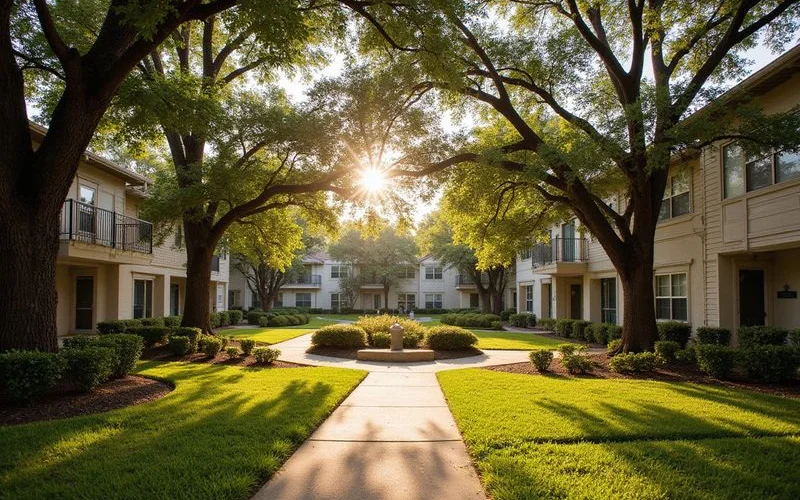
Garden-style. Two to three storeys, exterior entrances or open breezeways, surface parking, spread across a site with landscaping. The dominant form in Houston’s older stock and across the suburban rings.
Mid-rise. Roughly four to twelve storeys, interior corridors, usually structured or podium parking, a moderate amenity package. Common through the Inner Loop submarkets and newer suburban infill.
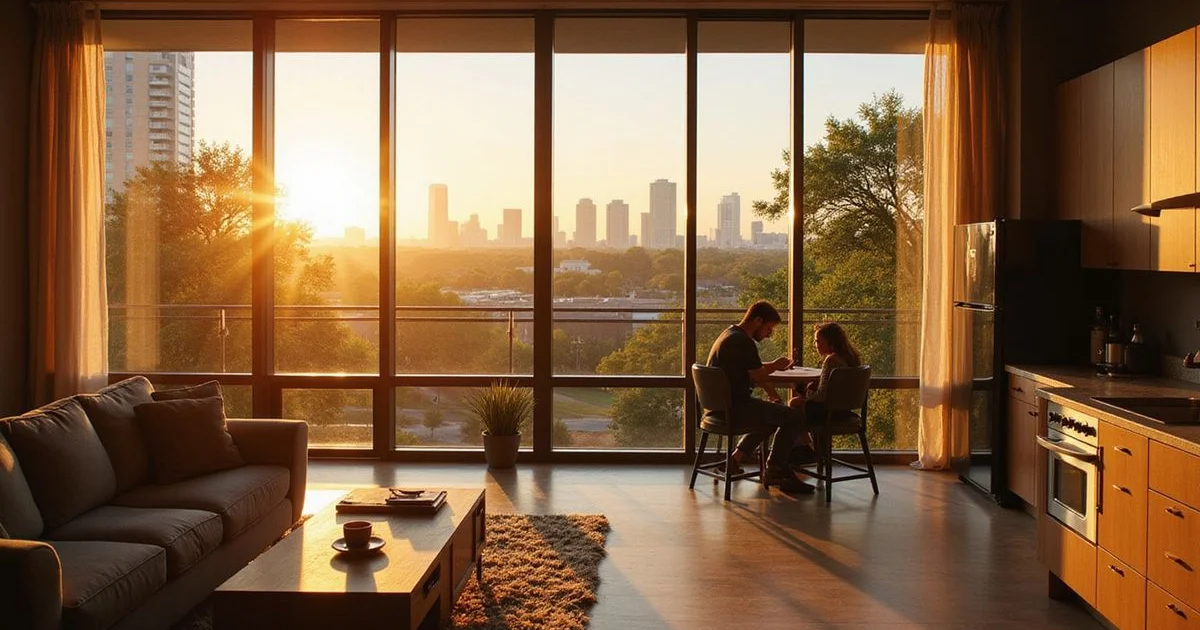
High-rise. Taller, structured garage parking, concierge or attended lobby, and a full amenity deck. Concentrated Downtown, in the Museum District, and around Galleria/Uptown.
Everything else — price, noise, fee load, dog practicality — follows from those structural differences. The luxury end is covered on luxury and high-rise apartments.
How they compare
| Garden-style | Mid-rise | High-rise | |
|---|---|---|---|
| Typical rent | Lowest | Middle | Highest |
| Recurring fees | Lightest | Moderate | Deepest |
| Parking | Usually surface, often free | Structured, sometimes charged | Garage, almost always charged |
| Amenities | Pool, basic fitness | Fitness, lounge, sometimes co-working | Full deck, concierge, sky lounge |
| Noise profile | Neighbours beside and above | Corridor and shared walls | Elevator, corridor, street below |
| Green space | Best | Variable | Minimal at ground level |
| Where it concentrates | Suburban rings, older Inner Loop stock | Midtown, Heights, EaDo, Montrose | Downtown, Museum District, Uptown |
The cost gap is bigger than the rent gap
Because the fee stack scales with the building type.
A garden-style community with free surface parking and a $4 pest fee is close to its advertised rent. A high-rise with a $150 garage charge, $35 valet trash, a $50 amenity fee, and $65 bulk internet is $300 above its advertised rent — the breakdown is in what the amenity fees cover.
So two units advertised $400 apart can be $700 apart in practice. Compare all-in or don’t compare.
What each type is actually good for
Garden-style suits anyone prioritising space per dollar, ground-floor access, a dog, or a quieter setting. The trade is older stock on average, fewer amenities, and a car-dependent location in most cases.
Mid-rise suits renters who want walkability and a decent amenity package without the high-rise fee load. It’s the most common form in the inner submarkets and usually the best balance if you’re unsure.
High-rise suits renters who want the view, the amenity deck, and a Downtown or Uptown location, and who will actually use what they’re paying for. If you wouldn’t use a concierge or a sky lounge, you’re subsidising them.
The honest test
Count the amenities you’d genuinely use each week. If the number is under two, a mid-rise or garden-style community will give you the same life for meaningfully less money.
Noise, which nobody asks about
Garden-style puts neighbours beside and above you, with exterior doors that reduce corridor noise but let in weather and parking-lot sound.
Mid-rise and high-rise concentrate noise differently: lift shafts, trash chutes, corridor traffic, and — in newer construction — hard-surface flooring that carries footfall. On a tour, ask what’s above the unit and what’s behind each shared wall.
Where the concessions are
Heaviest in high-rise and in new lease-ups of any type, because those are the buildings competing hardest for occupancy in a market that softened through 2026. Garden-style stock runs lighter offers and often starts lower.
Whichever type you’re weighing, the same four numbers decide it: effective rent, fee total, renewal estimate, and early-exit cost. We run all four on every option — free, because the property pays our fee after you sign.